THE WAFFLE GUIDE
All the letters are already on the board. The puzzle is deciding where each one belongs.
In this guide
Waffle at a glance
What is the Waffle word game?
Waffle is a word puzzle about rearranging letters in a crossing grid. James Robinson created it in 2022, and Waffle Studio now publishes a collection of games. In an interview, Robinson traced the initial idea to washing dishes in January of that year.[2][3]
Our view is that Waffle combines two kinds of reasoning: finding plausible words and moving their letters economically. Seeing the vocabulary is only part of the solve. You also need a plan for delivering the right tiles to those positions without wasting swaps.
How to play Waffle
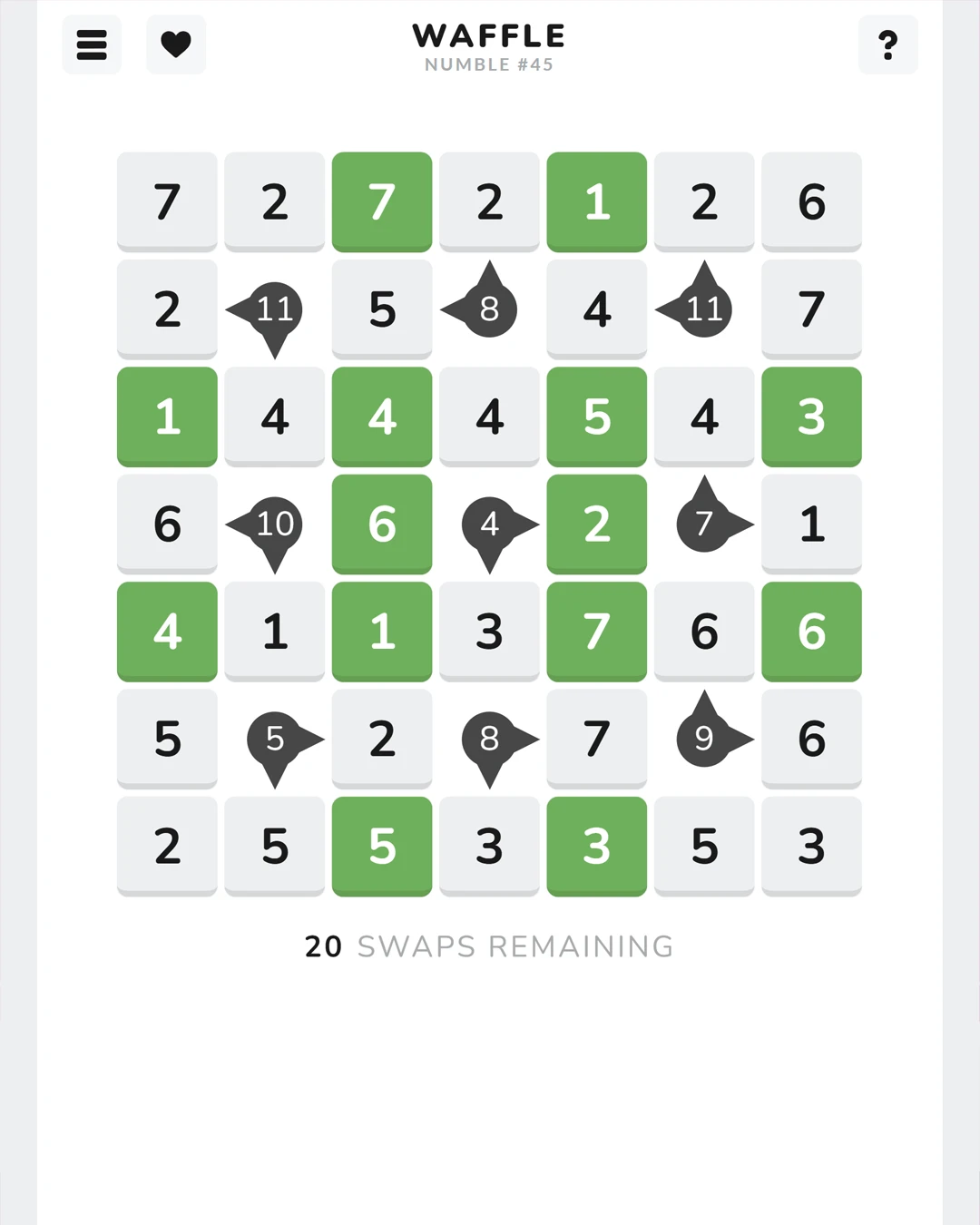
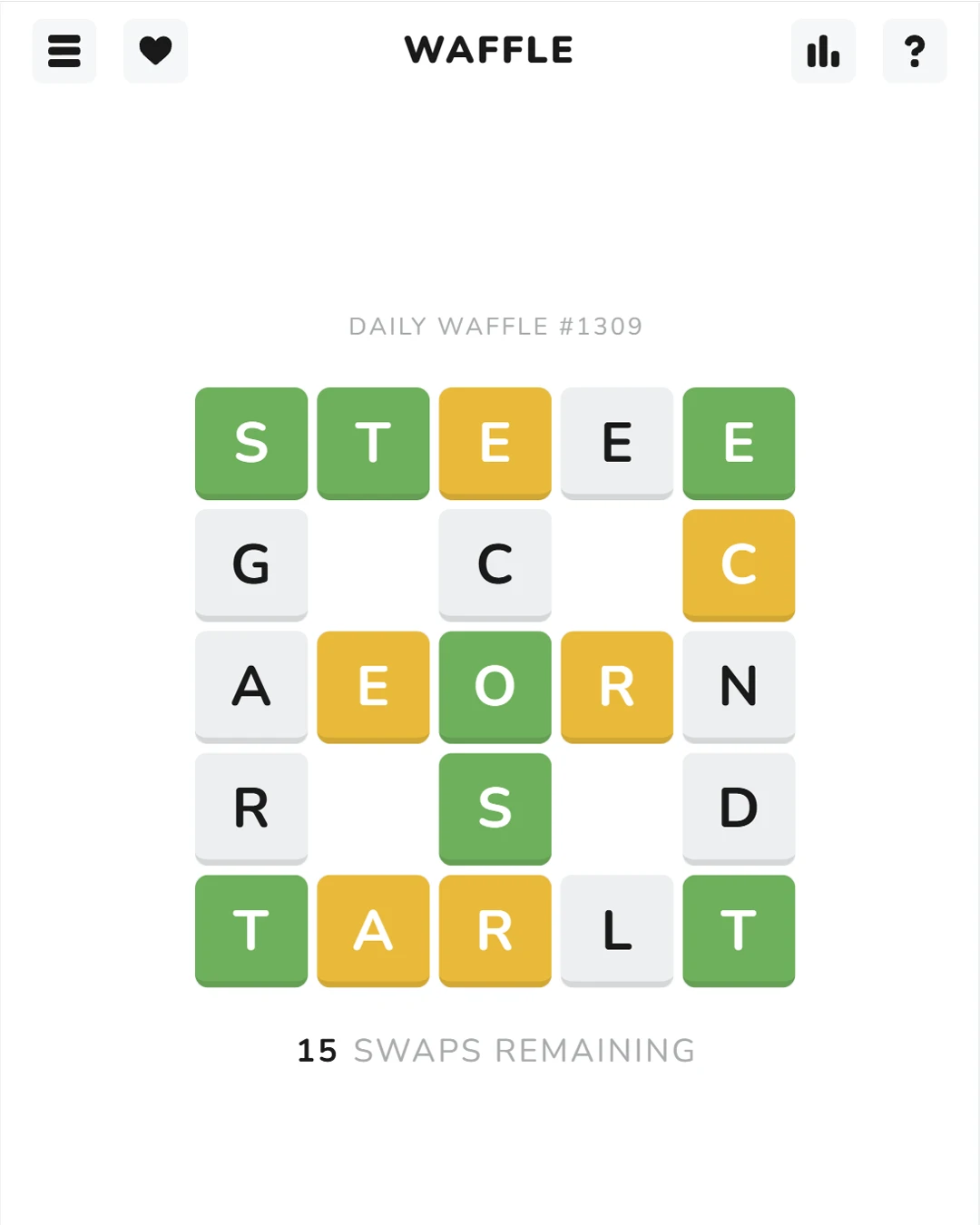
Drag one letter onto another to swap their positions. Complete the horizontal and vertical words within fifteen swaps. The official rules say a regular Waffle has a ten-swap solution; each unused swap becomes one star.[1]
Before moving anything, inspect the most constrained word. Build a candidate from its confirmed letters, then check that its crossing letters can also form sensible words. This editorial routine is slower than trying an immediate anagram but can prevent a promising local word from damaging the rest of the grid.
What Waffle’s green and yellow letters mean
Green indicates the correct position. Yellow means the letter belongs in the relevant word in another position; at a crossing it may belong to either intersecting word. Repeated letters need care: highlighting establishes a letter requirement, not necessarily a unique destination for that particular copy.[1]
Our advice is to separate the identity of a letter from the identity of a tile. If two copies of the same letter exist, ask which positions need that letter before choosing which copy to move. A color clue may tell you that a word contains an E without telling you which physical E should fill it.
Waffle strategy for preserving swaps
Look for a reciprocal swap
Plan a swap that helps both positions whenever possible. If one square needs A and currently contains T, look for an A sitting in a square that needs T. That exchange fixes two cells at once. This is an invented illustration of a useful move pattern, not a promise that every board contains an immediate two-cell fix.
Trace a three-letter cycle
When there is no such pair, trace a small cycle of misplaced letters. Imagine three positions needing A, B and C while currently holding B, C and A. Two deliberate swaps can rotate the letters into place. Thinking in cycles is more economical than repeatedly parking letters in temporary positions.
Resolve words before moving tiles
Do not spend a swap just to test a word unless you are prepared for the cost. Keep alternate candidates mentally or on paper, verify intersections, and then move. If a newly fixed letter invalidates a candidate elsewhere, revise the candidate before touching another tile.
Daily reset, Waffle archive and other modes
Waffle defaults to midnight GMT and offers a local-midnight setting. Its archive states that past puzzles do not affect regular statistics. The menu also lists Deluxe Waffle, Number Waffle and supporter-only Waffle Royale; their schedules and rules differ from the regular daily.[1]
For practice, revisit an older board and explain why each planned exchange helps. For a daily ritual, decide whether your aim is simply completing the words or improving the route. Those goals encourage different levels of caution, even though both use the same board.
Waffle FAQ
How many swaps do I get in Waffle?
Fifteen. Each regular daily has a ten-swap solution.[1]
How are Waffle stars earned?
One star per unused swap.[1]
When does Waffle reset?
Midnight GMT by default; local midnight is optional.[1]
Do archive puzzles change my regular statistics?
No, according to the official archive.[1]
Sources & verification
Checked · Daily Games editorial desk
- Waffle: official rules, settings, archive and modes wafflegame.net
- Waffle Studio: official studio introduction waffle.dev
- James Robinson interview on creating Waffle www.pocketgamer.biz
Rules and access notes use the sources linked above. Examples and strategy suggestions are our editorial explanations, not guaranteed solutions. Original games can change. How we research guides.
Did this guide help?
Help us keep Waffle useful and accurate.