THE NUMBER WAFFLE GUIDE
The digits are already on the board. Your job is to put them in the correct positions without spending more swaps than you need.
In this guide
Number Waffle at a glance
What is Number Waffle?
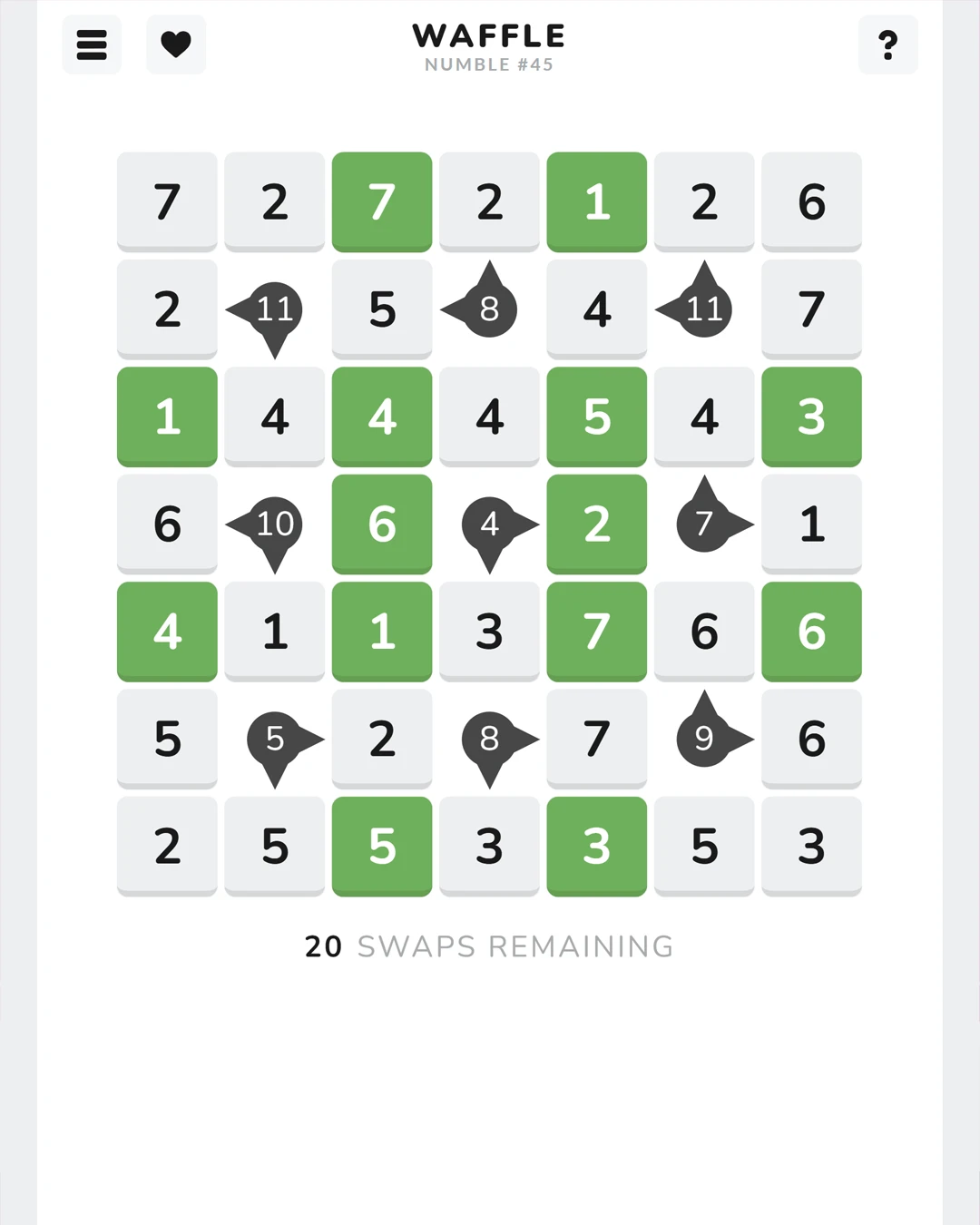
Number Waffle is a daily number-swapping puzzle from Waffle Studio. The objective is to arrange each row and column so it contains the digits 1 through 7. Unlike a blank-grid puzzle, your material is already present: you move the existing digits by swapping their positions.[2]
The official rules allow twenty swaps and state that every puzzle can be solved in fifteen. Each swap left at completion becomes a star. Green digits are correctly placed, while circles specify the sum of the cells they point toward.[1]
Read the board before you drag
Our recommended first pass has three questions: which positions are fixed, which digits are missing from each row or column, and which circle clues constrain the uncertain cells? Answering them before moving makes it easier to distinguish a deduction from a trial swap.
Start where the board gives you the fewest possibilities. A row with only two uncertain positions is usually easier to reason about than a row with many. Carry each deduction into the crossing column, then check whether it agrees with the sum clue. These checks should reinforce each other rather than be treated as separate mini-puzzles.
Do not import rules from a different number game. Work with the row, column and circle conditions actually displayed. A pattern that looks familiar can be useful, but a guessed extra constraint may send otherwise careful reasoning in the wrong direction.
A simple sum-clue example
Here is an invented example: a circle points to two cells whose total is 11. If one is already known to be 4, the other must be 7. The subtraction is easy; the real task is identifying exactly which cells the circle refers to, then checking that the result also fits the row and column.
For a clue covering several unknown cells, record the remaining total after subtracting known values. You do not need to decide the order immediately. A later row or column deduction may distinguish two values that both fit the sum. This is a way to avoid spending a move merely to learn something you could have inferred.
How to protect your remaining swaps
Plan a destination before dragging a digit. A swap that fixes one position while disturbing a useful placement may not be progress. Look for a pair whose values are each needed in the other position, or a short cycle you understand completely.
For a purely illustrative three-position cycle, suppose the values are 1, 2 and 3, while their required order is 2, 3 and 1. Swapping the first two, then the last two, resolves all three positions in two moves. The lesson is to see the movement pattern before touching the board, not to follow those numbers as a puzzle answer.
When reviewing a completed attempt, separate solving from efficiency. You may have understood every constraint but spent extra moves reorganizing a cycle. Noticing that difference gives you a specific target for the next puzzle without needing someone else’s full solution.
Number Waffle versus the original Waffle
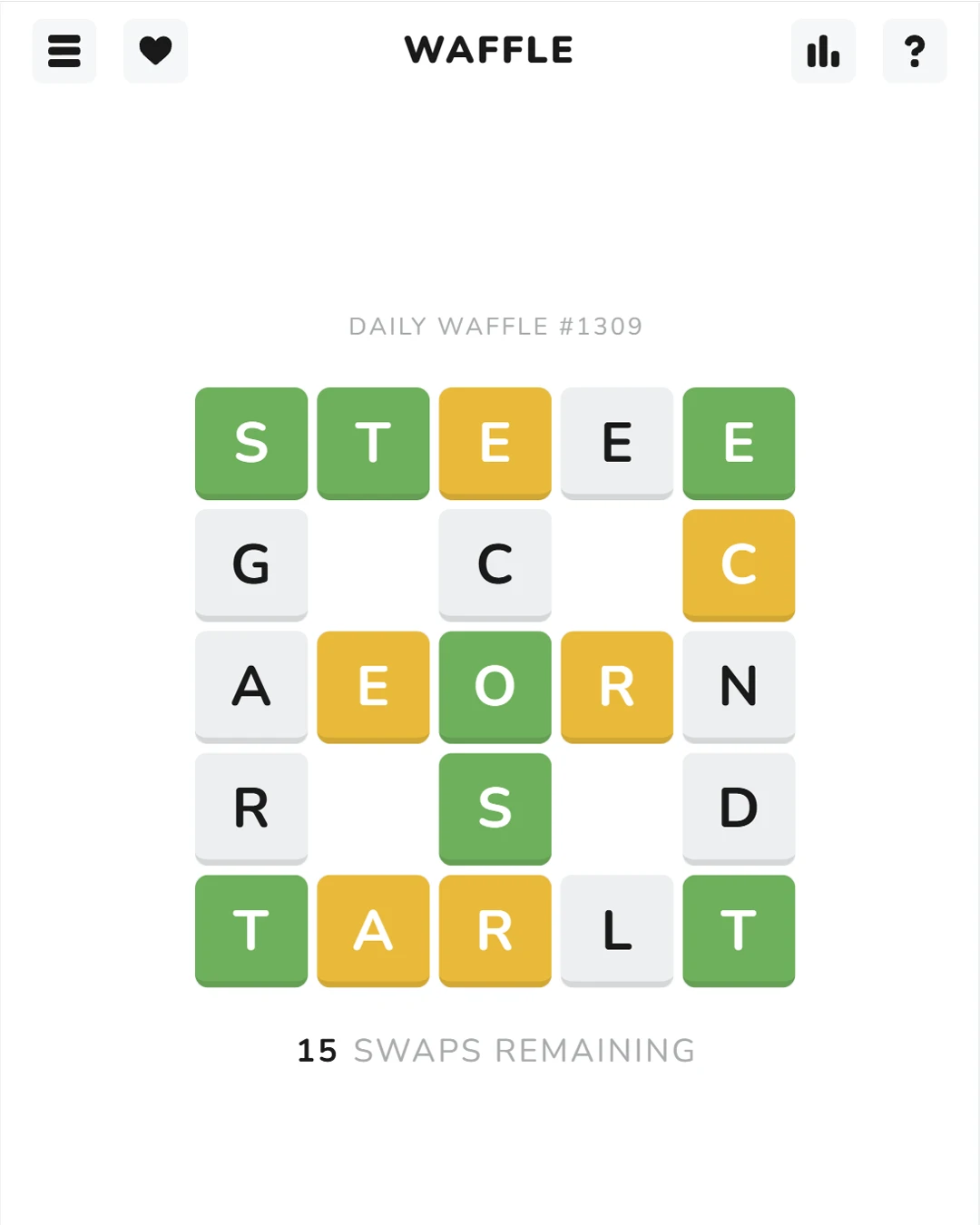
The official site also contains the letter-based Waffle, whose help uses a different swap budget. For Number Waffle, use the dedicated number instructions: twenty allowed swaps, a fifteen-swap minimum and circle sums. Do not carry the word edition’s fifteen-swap allowance into this mode.[1]
The site’s Settings offers midnight GMT or local-midnight delivery and says that timing cannot be changed during a puzzle in progress. Check the selected setting when comparing daily results across time zones.[1]
To keep a result spoiler-free, share the puzzle date and the swaps or stars you retained. A filled grid exposes the digit placements. If you want to discuss a tricky circle, wait until the other player has finished or ask whether they want a hint first.
Number Waffle FAQ
How many swaps do I get in Number Waffle?
The official number rules allow 20 swaps and say every puzzle has a 15-swap solution.[1]
What do the circles mean?
Each circle gives the sum of the numbers in the cells it points to.[1]
Why is a green number important?
Green marks a digit in its correct position, so it is an anchor for deductions.[1]
Sources & verification
Checked · Daily Games editorial desk
- Number Waffle official rules and settings wafflegame.net
- Playlin’s reviewed Number Waffle guide playlin.io
Rules and access notes use the sources linked above. Examples and strategy suggestions are our editorial explanations, not guaranteed solutions. Original games can change. How we research guides.
Did this guide help?
Help us keep Number Waffle useful and accurate.